
Originally published in The Climate Rights Brief
Imagine if the world’s largest historical emitter and the world’s current largest emitter had agreed to compete over reducing greenhouse gases. Picture the two most powerful governments in the world agreeing to aggressively pursue green transitions at home and abroad—with technology and equipment made free of forced labor. Think about life for people around the world if these two governments embraced their “legally binding obligations to prevent climate harm”—a core responsibility of states under international law.
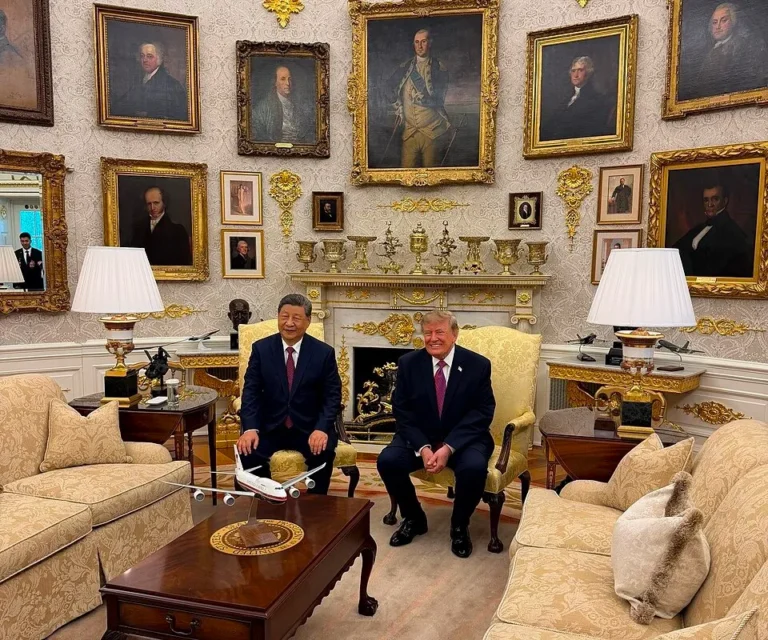
Last week’s summit between Chinese Communist Party General Secretary Xi Jinping and United States President Donald Trump addressed none of these concerns. While some countries are moving towards carbon neutrality or even plan to phase out fossil fuels entirely, six American and Chinese companies—Chevron, China National Offshore Oil Corporation, ConocoPhillips, ExxonMobil, PetroChina, and Sinopec—rank among the top ten oil producers in the world, and all are expanding.
China’s reliance on coal has diminished, but that dirtiest of fossil fuels still makes up about half of the national energy mix. The Trump administration is reversing decades of policy and resuming support to the coal industry, while loosening restrictions on the dangerous pollutants emanating from burning coal. To make matters worse, the White House boasted that Beijing agreed at the September meeting to purchase 10 million metric tons of American coal per year in 2027 and 2028.
Summits are known for hot air, but methane didn’t make the agenda either, despite the two countries leading the world in producing this climate-busting greenhouse gas. The U.S. is now not only relaxing rather than tightening restrictions on methane, but also opting not to assess the public health implications of that decision. In China, already chart-topping methane emissions are set to grow.
While the world continues to experience extreme heat that kills tens of thousands, perhaps it’s better that the two sides did not attempt to discuss managing extreme heat or severe weather—Washington is rolling back protections around the former, while Beijing is censoring information about the latter.
U.S. wariness of Chinese-made electric vehicles is evident in Congressional debates, but green technology was not up for discussion. The Trump administration generally regards the green transition as a “woke” conspiracy. Xi’s government deserves credit for leading the world in wind, solar, and hydropower, but prior administrations might have raised the fact that little in China is produced in compliance with international standards on workers’ rights or land rights. Credible allegations about forced labor in green technology supply chains persist.
Even as international human rights law evolves in response to the climate crisis, both governments have been miserably aligned on the wrong side. Both deployed the same factually incorrect and nakedly self-serving arguments to the International Court of Justice (ICJ): that existing law was sufficient to resolve the crisis, and that individual countries’ climate culpability couldn’t be determined. The ICJ rejected these arguments, but there is no reason to believe either government will respect the new standards the court set out.
Who benefits from keeping this issue off the summit agenda? Primarily the political powers aligned with fossil fuel production, and the fossil fuel producers themselves.
And who pays? We all do.
Photo: U.S. President Donald Trump welcomes CCP General Secretary Xi Jinping to the Oval Office on September 24, 2026. Credit: Margo Martin / The White House (public domain).