Deforestation, burning of fossil fuels and other key drivers of climate change, as well as efforts at adaptation (such as mining for critical minerals) can also lead to violations of rights.
The preamble of the Paris Agreement states that Parties should “respect, promote and consider their respective obligations on human rights” when undertaking climate action and stresses the importance of public participation and access to information. The preamble also addresses specific human rights and human rights-related issues, including poverty eradication, food security, gender equality, a just transition of the workforce, and the need to ensure ecosystem integrity.
Countries have obligations under human rights law to respect, protect, and fulfill human rights for all. As a result, their laws, policies, and actions related to climate change mitigation, adaptation, and loss and damage must respect and protect human rights. This includes both the effects of their actions and the failure to act, since the failure to act will lead to a foreseeable loss of human rights.
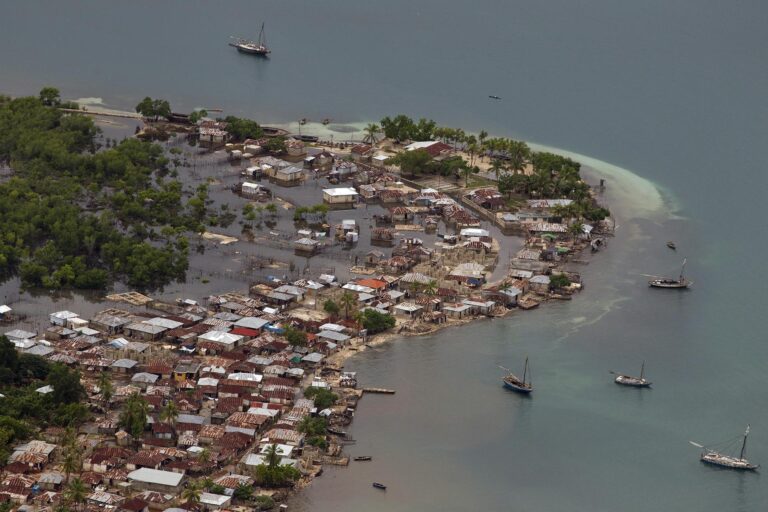
At a minimum, countries have obligations to adopt and implement legal frameworks to protect against environmental harm – through both mitigation and adaptation – that will threaten or violate human rights, including the rights to life, food, health, housing, water, and a healthy environment. In doing so they must also regulate private actors – including but not limited to businesses – to protect against such environmental harm. Efforts to address food shortages, a lack of potable water, destroyed or submerged housing, and similar challenges must focus on marginalized communities – the poor, ethnic or religious minorities, the low caste, indigenous peoples, and women – and not the politically well-connected, dominant groups in society.
The parties to the International Covenant on Economic, Social and Cultural Rights (ICESCR) have guaranteed that the rights to food, housing, and health in the ICESCR will be exercised without discrimination of any kind as to race, color, sex, language, religion, political or other opinion, national or social origin, property, birth or other status. The parties to the International Covenant on Civil and Political Rights (ICCPR) similarly have committed to ensure to all individuals within their territory and subject to their jurisdiction their right to life, without distinction of any kind. Holding governments to these commitments will be critical for ensuring the “Just Transition” promised by the parties to the Paris Agreement.