Originally published in The Climate Rights Brief
Around the world, governments, activists, and ordinary people struggle to find the best tools to mitigate the worst effects of the climate crisis.
In a sea of climate misinformation and disinformation, one tool is crucial—accurate information. This is why last week’s revelations about how the government of Saudi Arabia is manipulating information sent to the United Nations Intergovernmental Panel on Climate Change (IPCC) is particularly alarming.
The IPCC’s reports are the gold standard. Its reporting is critical to global and national assessments of the climate crisis. The IPCC is therefore supposed to operate independently from state or corporate interests. Yet The Guardian reported that Saudi Aramco, Saudi Arabia’s state oil company, had links to “at least a dozen IPCC lead authors.” One of the IPCC working groups includes five people affiliated with the King Abdullah Petroleum Studies and Research Center, a Saudi government-funded thinktank chaired by the country’s energy minister. Its stated mission is to “advance Saudi Arabia’s energy sector”—in other words, to drill and produce more of the oil and gas that is causing the climate crisis.
Some might suggest that it’s precisely such expertise and perspective that can inform effective IPCC assessments and responses. But not only is the Saudi government notorious for thwarting climate action and censoring criticism—most memorably through the grisly execution of Washington Post journalist Jamal Khashoggi in its embassy in Turkey—but Saudi Aramco is also the biggest emissions-producing company in history. Addressing the root causes of climate change would upend its basic business model. It is therefore no surprise that Saudi Arabia is a fierce opponent of any meaningful dates or timelines for a phaseout of fossil fuels.
Governments and companies have long tried to evade responsibility for the climate crisis by censoring key data or offering up unreliable information. Major oil companies have long since lost the public trust because of their denials and lies about the causes and dangers of climate change.
How much do the IPCC reports matter? Enormously: the IPCC reports remain the key benchmark against which global and individual country initiatives are assessed. Its integrity is based as much on the science as it is on being—and being seen to be—independently-generated research. Even though the Saudi affiliated scientists are just a few among the 782 main scientists involved in the latest IPCC report, their involvement raises unnecessary questions about the integrity of the process.
Some of the people identified in The Guardian report had registered their links through the IPCC’s conflict of interest policy. This might sound sufficient, but the IPCC has yet to take action against any conflicts of interest, rendering the policy little more than nice words on paper.
How did the Saudi government and others named by The Guardian investigation respond to questions? In keeping with the preference for opacity, “Aramco declined to comment, and none of the other individuals or institutions responded to requests for comment.” The IPCC did itself no favors in telling The Guardian that there is “no process currently under way to amend its conflict of interest policy.”
In a world of massive climate disinformation funded by the fossil fuel industry, trust is hard to earn and easily lost. To ensure the reality and perception that its work continues to be based on an independent assessment of the best available science, it should urgently prioritize a comprehensive review of all possible conflicts of interest, act to address them, and include only truly independent researchers in its work.
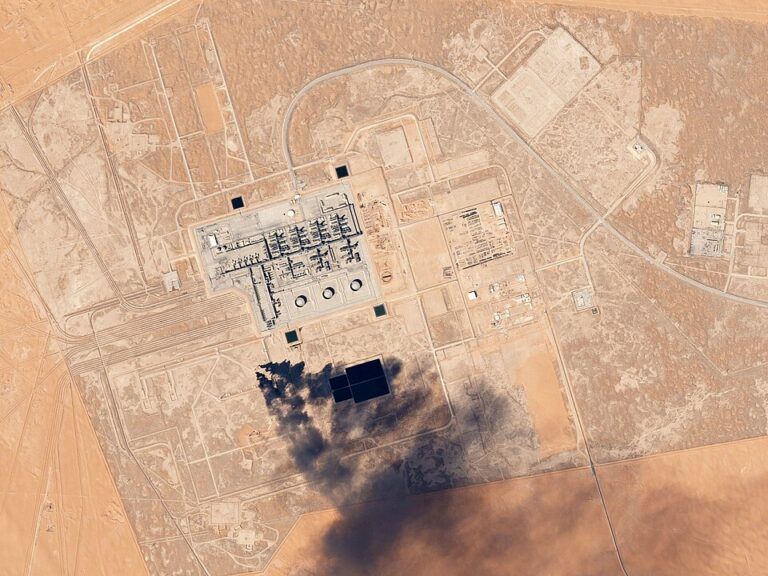
Photo: Khurais Oil Processing Facility, Saudi Arabia. Credit: Planet Labs, via Wikimedia Commons, CC BY-SA 4.0.