This is the first in a Climate Rights International series on what Brazil’s election could mean for the Amazon and the climate crisis.
Brazil’s election could shape the future of the Amazon rainforest and other threatened ecosystems across the country for generations to come. During Jair Bolsonaro’s four years as president, from 2019 to 2022, Brazil lost roughly 4.5 million hectares of Amazon rainforest—an area larger than Denmark. His government gutted institutions designed to protect the environment, and the environment ministry’s spending fell to its lowest level in more than two decades.
Since then, the administration of President Luiz Inácio Lula da Silva has rebuilt enforcement, cutting the annual rate of Amazon deforestation roughly in half. Nevertheless, more than 2 million hectares were cleared from 2023 through 2025. “We inherited a train speeding toward a cliff,” Rodrigo Agostinho, then head of Ibama, Brazil’s federal environmental enforcement agency, told Climate Rights International in 2025. “We’ve slowed the train, but we’re still headed for disaster.”
What’s at stake
The Amazon stores vast amounts of carbon and plays a vital role in sustaining rainfall across much of South America. Scientists warn that the rainforest is headed toward a “tipping point” where large areas could dry out, unleashing ecological and economic havoc in Brazil and neighboring countries. If this happens, massive amounts of carbon will be released into the atmosphere, with potentially catastrophic consequences for global efforts to contain climate change. Deforestation also destroys wildlife habitat and threatens Indigenous and traditional communities, as ranchers and land-grabbers encroach on their territories.
The country’s other ecosystems face mounting risks as well—most notably in the Cerrado, a vast savanna with significant carbon reserves, where deforestation rates also remain high.
Cattle ranching is the largest driver of deforestation in Brazil, linked to an estimated 93 percent of clearing in the Amazon and about 70 percent in the Cerrado. Much of that clearing is illegal. Between 2009 and 2024, 96 percent of deforestation in the Amazon lacked a publicly recorded authorization.
When Ibama, the federal environmental enforcement agency, detects illegal clearing, it can place an embargo on the property where the clearing occurred. Ranching, farming, and other commercial activity there must stop until the violation is resolved, and anyone who purchases cattle or crops raised on that land can also be penalized. But whether Ibama can enforce its decisions depends largely on the staff, resources, and backing it receives from the executive branch.
Jair Bolsonaro’s record
On forests, a useful guide to a Flávio Bolsonaro presidency is the record of his father, whose political movement he is now carrying into the runoff. Amazon clearing exceeded 10,000 square kilometers in every year of Jair Bolsonaro’s presidency. Over those four years, Brazil lost nearly 60 percent more Amazon rainforest than in the four years before he took office, and in 2021, deforestation reached its highest annual rate in 15 years.
Jair Bolsonaro’s government dismantled much of the federal effort to curb Amazon deforestation established during Lula’s previous terms in office. It abandoned the national anti-deforestation plan and effectively froze the donor-financed Amazon Fund, stopping it from approving new projects. In 2019, Jair Bolsonaro’s environment minister removed 21 of Ibama’s 27 regional directors, and the agency’s budget was cut by 25 percent. Its corps of field inspectors shrank by nearly a fifth over the next two years.
Lula’s record
Lula began reversing Jair Bolsonaro’s changes on his first day back in office in 2023. He restored the anti-deforestation plan and the Amazon Fund, and appointed Marina Silva—who had overseen a steep decline in deforestation during his earlier presidency—to lead the environment ministry again. His government resumed enforcement and, in 2025, appointed hundreds of new Ibama staff.
The annual Amazon deforestation rate fell from more than 11,000 square kilometers in 2022 to 5,731 in 2025, its lowest level in more than a decade. Yet even at that reduced rate, more than 1,500 hectares of Amazon rainforest were still being lost each day. Meanwhile, Lula’s government has backed plans to pave the roughly 4.5 million hectares highway, which scientists warn could spur further clearing.
The choice ahead
The next administration will take office with deforestation still at a dangerous scale, and now with fewer checks on the activities that drive it. The clearest example is an August 2025 law that weakened environmental licensing, the process by which authorities assess projects for environmental harm before they proceed. The conservative-dominated Congress passed it with strong backing from the agribusiness caucus and later overrode President Lula’s vetoes of key provisions. The law exempts many farming and cattle activities from environmental licensing and simplifies approval for qualifying small- and medium-sized projects deemed to have low or moderate environmental impacts. It does not remove the requirement for permission to clear trees or other native vegetation, but less scrutiny can make projects’ environmental impacts on forests harder to assess.
Lula’s platform pledges to reach net-zero deforestation by 2030, continue enforcement, expand satellite monitoring, and allocate public lands to conservation areas and territories belonging to Indigenous peoples and quilombolas—communities descended from people who escaped slavery. If he is re-elected, sustaining and building on the decline in deforestation will depend in large part on whether his administration can make illegal clearing less profitable. That includes making embargoes effective, improving traceability throughout cattle supply chains, and preventing land grabbers from gaining title to public land they have illegally cleared.
Flávio Bolsonaro’s platform pledges to end illegal deforestation by 2029 and calls for stronger satellite monitoring and action against land grabbing. But it also proposes loosening regulation, including automatic approval of environmental licenses when agencies fail to decide within a deadline.
His pledge’s focus on illegal clearing also leaves a dangerous loophole, as his own record shows. In 2019, he co-sponsored a bill to abolish the requirement that rural landowners preserve part of their property as a “legal reserve” of forest or other native vegetation. He and his co-author withdrew it four months later. Still, if he sought to weaken forest protections again, his party’s enlarged bloc in Congress—which won the most seats in the lower house on October 4—could help him make more clearing legal, allowing illegal deforestation to fall even as the total area cleared grows.
How the next administration handles enforcement will also shape the risks facing environmental defenders and local communities, who have long played a key role in protecting the country’s forests. Under Jair Bolsonaro, the criminal networks driving much of the deforestation in the Amazon grew more brazen, using violence and intimidation against those who stood in their way as enforcement weakened. Under Lula, enforcement has strengthened, but people in Indigenous territories and community conservation areas have continued to face invasions, threats, and attacks, often without secure land rights or effective protection.
Whoever wins, the future of Brazil’s forests will also depend on whether the people defending them can hold their land and report illegal deforestation without fear of retaliation.
Read the other explainers in our Brazil election series.
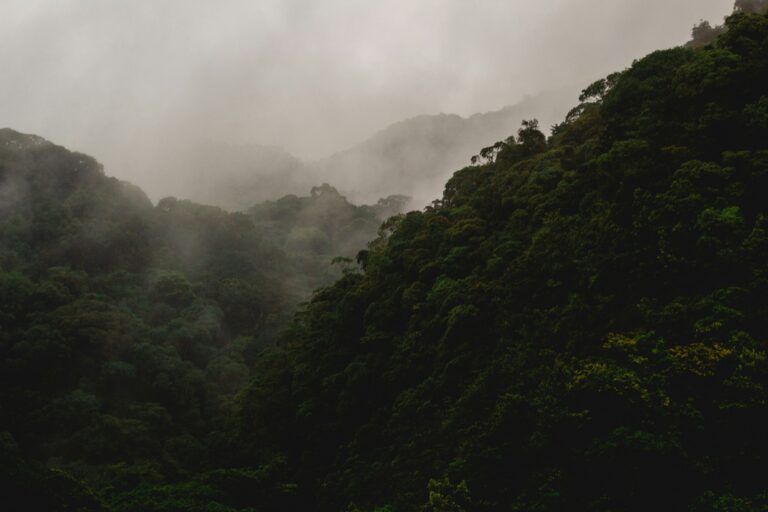
Photo: Forest in Brazil. Credit: Bruno Thethe/ Unsplash.