(New York, April 22, 2026) – The United States government should reverse rollbacks of its already limited protections for workers exposed to dangerous heat on the job, which leave millions at increased risk of occupational illness and death, Climate Rights International said today. A new directive issued by the Occupational Safety and Health Administration (OSHA) revises the agency’s National Emphasis Program on Heat-Related Hazards, narrowing enforcement and removing specific targets that previously enabled a more proactive approach to workplace safety.
The changes come amid continued delays in the process to adopt a binding federal heat standard. Despite years of mounting evidence about both the human and economic toll of occupational heat exposure, OSHA has yet to finalize a nationwide rule that would require employers to implement basic protections like access to water, rest breaks, training, and shade. Efforts by Republican lawmakers to weaken the draft rule further illustrate a broader push to prioritize deregulation over worker safety.
“Extreme heat is the deadliest climate risk facing the United States today and is a significant driver of workplace injury and illness,” said Cara Schulte, researcher at Climate Rights International. “By scaling back enforcement and accountability efforts, the government is failing to meet its obligation to protect workers from an increasingly deadly but entirely preventable hazard.”
In the absence of a national heat standard, workers are left to depend on temporary inspection and outreach mechanisms, like the National Emphasis Program, for protection. Yet the Trump Administration’s updated directive strips back what were already inadequate and impermanent safeguards, including by reducing the scope of workplace heat safety inspections to cover fewer industries and removing numerical inspection quotas. It also weakens accountability for employers by emphasizing self-referral inspections and voluntary compliance, effectively asking employers to police themselves.
The consequences of inadequate protections are already evident across the country. Nationally, an estimated 170,000 workers in the U.S. suffer from heat-related illnesses each year; and about 28,000 occupational injuries can be linked to work on hot days. The burden of heat exposure also falls disproportionately on lower-wage workers, who experience heat-related injuries at a rate five times greater than America’s highest-paid workers.
Given the lack of strong federal protections, several states—including California, Colorado, Maryland, Minnesota, Oregon, and Washington—have begun adopting their own workplace heat standards. Most recently, Virginia Governor Abigail Spanberger approved legislation directing the development of similar protections.
But state-level policies are inconsistent and leave millions of workers exposed. Some states have even moved in the opposite direction, with both Florida and Texas passing laws in recent years to prevent cities and counties from adopting their own workplace heat rules.
“As summer nears and temperatures continue to rise, it is more urgent than ever that the U.S. government enhances enforcement through the National Emphasis program,” said Schulte. “Instead of rolling back already weak protections, the Trump Administration should be moving to adopt a strong and effective national heat standard, one that ensures employers are held accountable for offloading climate risks onto the lives of vulnerable workers.”
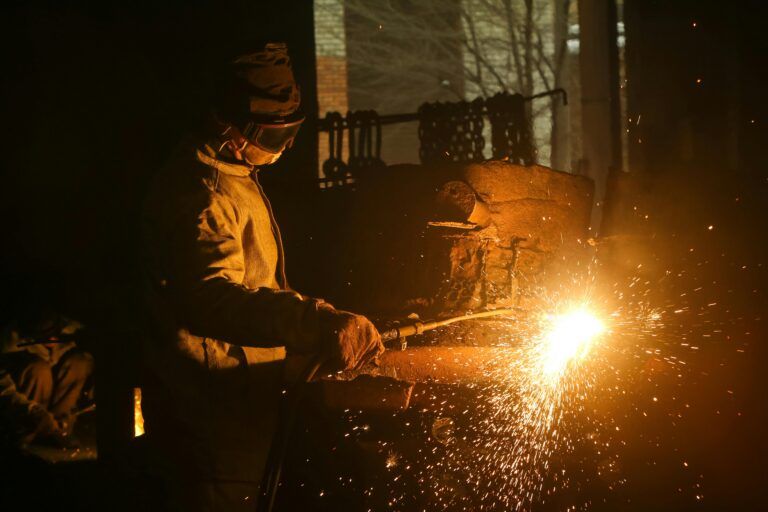
Photo: Worker with welding machine. Photo Credits: Kateryna Babaieva/ Pexels.

